
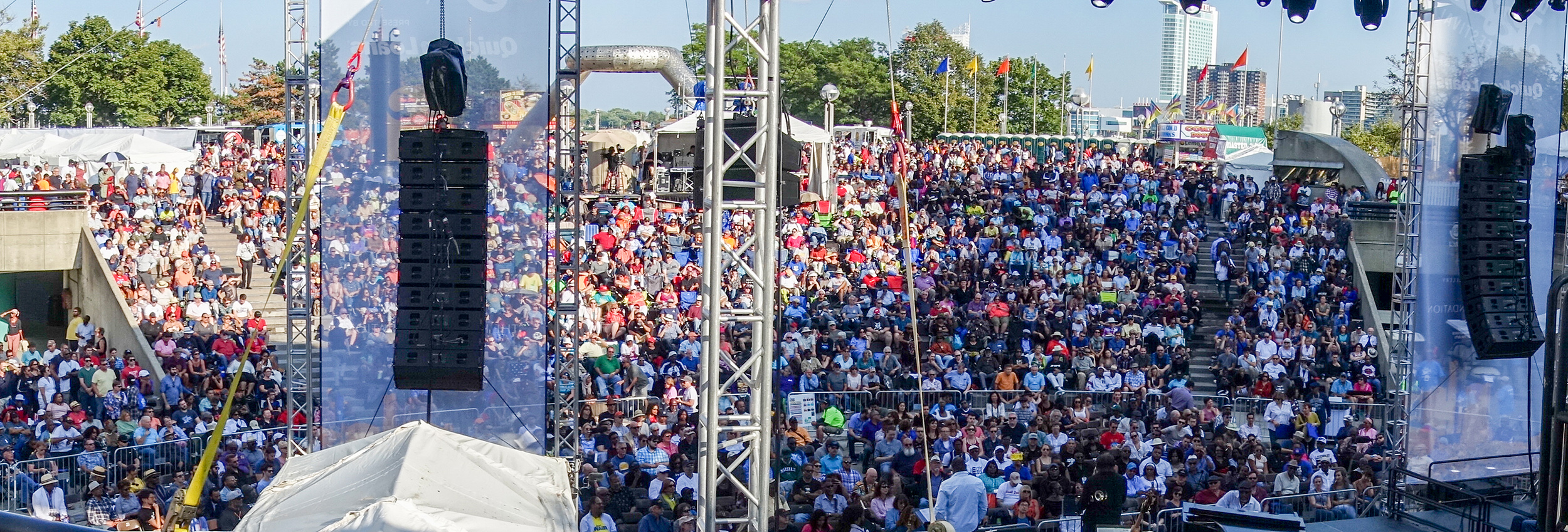
The Detroit Jazz Festival is coming on Labor Day weekend, September 4-7, 2026. It’s the largest free jazz festival in the U.S. In celebration of this event, Detroit Legacy Tours is offering special days and times for its jazz-focused Detroit history walking tour, including Sunday morning, September 9 at 9 a.m. and Monday morning, September 10 at 9 a.m. There are other dates and times available that week too.
Bebop, Boulevards, and Boomtown. This tour features downtown highlights, including Griswold Street, Campus Martius, and Grand Circus Park districts. Then we journey to the historic neighborhoods of Paradise Valley and Black Bottom, where jazz and blues reigned supreme. Hear the stories of historic jazz clubs, lively neighborhoods, and businesses that served the community. Jazz legends played and recorded here, including Charlie Parker, Dizzy Gillespie, John Coltrane, and Miles Davis.
This tour involves walking over 1.5 miles on city streets and sidewalks. It moves at a modest pace, and it is designed for adult participants.

Bebop, Boulevards, and Boomtown – The Jazz Tour Highlights
Campus Martius
Detroit’s own “Field of Mars” has a storied past and a fascinating origin. After Detroit burned to the ground in 1805, this became the point of origin for a bold new vision — a city plan inspired by Washington, DC and Paris, France. We’ll explore the life of Augustus Woodward, the territorial judge who championed the plan, and the struggles he faced to make it a reality. Along the way, we’ll trace more than 200 years of change to the buildings and monuments that have defined this iconic square.
Griswold Street
Step back in time along “The Wall Street of Detroit,” home to one of the finest collections of skyscrapers from the 1910s and 1920s. We’ll also uncover the remarkable story of how jazz history was made in a theater just one block away.
Cadillac Square
First envisioned by Woodward as a grand boulevard, Cadillac Square evolved over time into a vibrant public square. Today it is flanked by some of Detroit’s finest architectural gems and some quirky ones — including Detroit’s very own Flatiron Building — and carries the layered history of a city that has always reimagined itself.
Black Bottom
Said to be named by French settlers for its rich, dark soil, Black Bottom is a historic neighborhood with a complex and culturally important history. We’ll visit its western edge — first settled by German immigrants and later home to waves of newcomers from many countries. By the 1930s and ’40s it had become a vibrant Black community, before urban renewal and freeway construction devastated what had been built. Here we’ll also learn about key figures in the Underground Railroad movement, the story of Detroit’s first Black church, and stroll Monroe Street — now known the world over as Detroit’s Greektown.
Paradise Valley and the Stadium District
The historic Paradise Valley neighborhood was once a thriving Black business and entertainment district in Detroit. It began as a primarily Jewish neighborhood and evolved to a primarily Black neighborhood in the 1920s. Today, the heart of Paradise Valley is now two major stadia: Comerica Park and Ford Field. We will see locations where historic jazz clubs once stood, hear the stories of jazz and blues legends who played there, and learn about the Detroit musicians who left their own mark. And we will hear about Black-owned businesses that once thrived there, and how urban renewal and freeway construction upended everything.
Grand Circus Park
Grand Circus Park was meant to be the central hub of Woodward’s ambitious radial street plan — though it was ultimately only half completed. The surrounding district became home to one of the country’s densest and most architecturally significant theater districts, flourishing through the 1930s and ’40s. We’ll explore the grandeur that once was, and what endures today.
Make the Detroit Jazz Festival event more memorable with a tour!


